Depositing money into a bank account has become easier thanks to various banking services, one of which is the Automated Teller Machine (ATM). In addition to cash withdrawals, some ATMs are equipped with cash deposit features that allow you to deposit money directly into your bank account without visiting a bank branch.
This feature offers greater convenience, especially when you need to deposit cash outside regular banking hours or have a busy schedule. The process is relatively simple, as you only need to prepare your cash and follow the instructions displayed on the ATM screen.
So, how do you deposit cash at an ATM correctly? What requirements should you prepare beforehand? Let's explore the complete guide below.
A cash deposit ATM is an Automated Teller Machine (ATM) equipped with a feature that accepts banknotes and deposits them directly into a bank account. This service is also known as a Cash Deposit Machine (CDM).
In addition to cash deposit ATMs, there are also machines equipped with Cash Recycling Machine (CRM) technology, commonly known as cash deposit and withdrawal ATMs. CRM machines offer more comprehensive functions because they allow users to both deposit and withdraw cash.
With these features, you do not always need to visit a bank branch to deposit money into your account. Simply visit the nearest ATM that supports cash deposit transactions and follow the instructions displayed on the screen.
Baca juga: How to Withdraw Cash from an ATM: Follow These Tips!
Before learning how to deposit cash at an ATM, there are several things you should prepare to ensure a smooth transaction.
Here are some general requirements to keep in mind:
Make sure you have an active bank account with a bank that provides ATM cash deposit services.
If you are using the conventional method, prepare your debit or ATM card linked to the account where you intend to deposit the money.
Make sure the money you intend to deposit consists of banknotes in denominations accepted by the ATM.
Your banknotes should not be folded, torn, wet, or otherwise damaged.
Make sure the ATM you intend to use supports cash deposits rather than cash withdrawals only.
Please note that each bank may have different requirements, including accepted banknote denominations, the maximum number of banknotes per transaction, and deposit limits. Therefore, it is advisable to check your bank's terms and conditions before making a transaction.
Once you have completed all the necessary preparations, you can proceed with the transaction. In general, you can deposit cash at an ATM using a card by following these steps:
First, locate an ATM equipped with a cash deposit or cash deposit and withdrawal feature. Make sure the machine is compatible with the bank that issued your account.
Insert your ATM card into the designated slot, then select your preferred language. Next, enter your ATM PIN correctly.
Make sure no one can see your PIN when you enter it to keep your transaction secure.
Once you have accessed the main menu, select the "Cash Deposit" option. The exact menu name may vary depending on the bank and ATM model you are using.
Before inserting your money, make sure all banknotes are neatly arranged. Separate them by denomination if necessary, and ensure that none of the notes are folded, torn, or held together with rubber bands or paper clips.
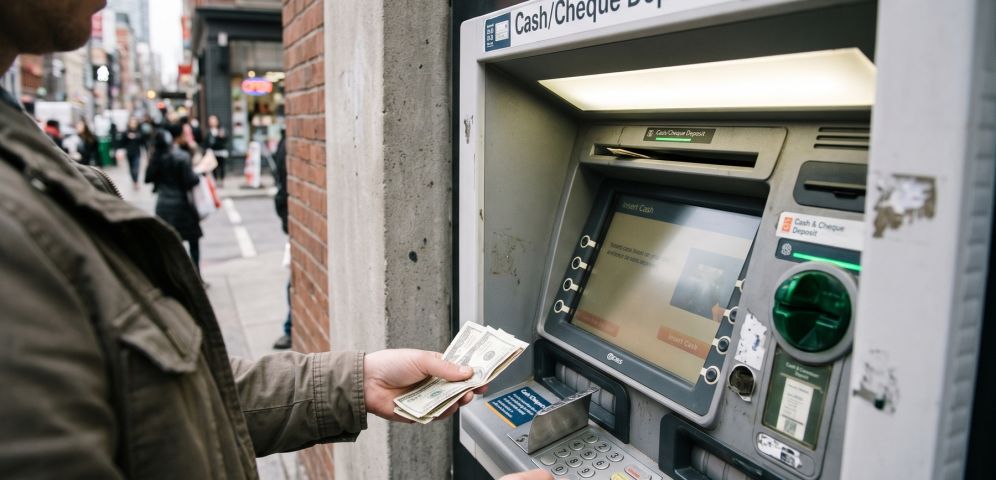
When prompted by the machine, open the cash acceptor and insert your money according to the instructions provided.
The ATM will automatically count the banknotes you have inserted. Once the counting process is complete, the screen will display the total amount of money detected by the machine.
Double-check the displayed amount to make sure it matches the cash you intend to deposit. If everything is correct, select "Deposit" or "Confirm" to proceed.
Next, select the account where you want to deposit the money from the options available on the ATM screen. Some banks allow you to deposit cash into your own account or another account within the same bank.
Make sure the account number and recipient details are correct before proceeding with the transaction.
Once all the steps are completed, the ATM will display a notification confirming that your cash deposit has been successful.
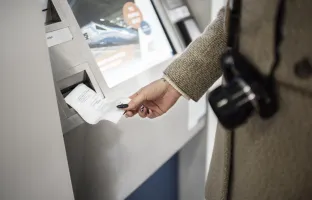
Remember to collect your transaction receipt if one is available. You can also check your account balance through an ATM or mobile banking application to ensure that the deposited money has been credited to your account.
In addition to using a debit card, some banks also provide cardless cash deposit services.
With this service, you can deposit money using a mobile banking application linked to your bank account. However, this feature is not available at all banks or ATMs.
In general, if your bank provides this service, you can follow these steps:
Once the transaction is complete, make sure you receive a success notification and check your account balance.
Although the process is relatively simple, there are several things you should pay attention to in order to avoid problems when depositing cash at an ATM.
Follow these tips to help ensure a smooth transaction:
Not all ATMs are equipped to accept cash deposits. Therefore, make sure you choose an ATM that has a cash deposit or cash deposit and withdrawal feature.
Folded, torn, wet, or physically damaged banknotes may be rejected by the machine. Arrange each banknote neatly before inserting it into the ATM.
Each ATM has its own requirements regarding the banknote denominations it accepts. To ensure a successful transaction, make sure the denominations you intend to deposit are accepted by the ATM you are using.
It is advisable to count all your banknotes before making a deposit. This allows you to compare the amount of money you insert with the total displayed on the ATM screen.
If you are depositing money into someone else's account, make sure the destination account number is correct. This is important to prevent deposit errors.
Do not discard your transaction receipt immediately after completing the deposit. Keep it until you have confirmed that the money has been credited to the destination account.
Never share your PIN, access codes, or transaction codes with anyone. Also, avoid asking strangers for assistance if you encounter problems while using an ATM.
Read more: How to Find the Nearest ATM Easily
Under certain circumstances, cash deposit transactions may not be completed successfully. This can happen for several reasons related to the condition of the banknotes or the ATM itself.
Here are some common reasons why ATM cash deposits may fail:
Banknotes that are torn, folded, wet, or damaged may be rejected by the machine.
ATMs only accept specific banknote denominations according to the bank's requirements.
Each ATM has a maximum limit on the number of banknotes or the total amount of money that can be deposited in a single transaction.
Problems with the banknote recognition components or the machine's system may prevent the transaction from being processed properly.
Connectivity problems may interfere with the verification and completion of the transaction.
If your transaction fails, do not leave the ATM immediately. Check the information displayed on the screen and make sure the machine has returned your banknotes.
If the money has already been accepted by the machine but your account balance has not increased, contact your bank's official customer service immediately. Provide the transaction time, ATM location, deposit amount, and any other relevant information to help resolve the issue.
Keep your transaction receipt or other proof of the deposit if available. Never share your PIN or other confidential information with anyone during the complaint process.
Depositing cash through an ATM is one of the banking services that makes everyday transactions more convenient. You can deposit money directly into your bank account without waiting in line at a bank branch, as long as a cash deposit ATM is available.
By understanding how to deposit cash at an ATM, from preparing your banknotes and following the on-screen instructions to confirming the transaction, you can complete your deposit more easily and conveniently.
Always make sure you use an ATM that meets your needs, keep your banking information secure, and double-check every transaction you make.
For a more convenient banking experience, take advantage of ATMi's extensive ATM network across various locations. Find your nearest ATMi ATM and enjoy easier access to banking transactions whenever you need them.
No. Only ATMs equipped with a cash deposit feature, such as Cash Deposit Machines (CDMs) and Cash Recycling Machines (CRMs), can accept cash deposits. Make sure you choose a machine that supports this feature.
Not necessarily. Some banks provide cardless cash deposit services through their mobile banking applications. However, the availability of this service depends on each bank's policies.
The minimum cash deposit amount may vary depending on the bank and ATM model. The requirements generally depend on the accepted banknote denominations and the bank's service policies.
Yes, provided that the bank offers a feature for depositing cash into another account. Make sure the destination account number is correct before confirming the transaction.
Contact your bank's official customer service immediately to report the issue. Provide information about the transaction time, ATM location, and deposited amount. If available, keep your transaction receipt as supporting evidence.