In the ever-evolving era of digital banking, ATMs (Automated Teller Machines) remain a vital component of the banking service system. People still rely on ATMs for transactions such as cash withdrawals and deposits.
For the banking industry, ATMs are not merely facilities for withdrawing cash; they are key service channels that help improve the quality of customer service.
To better understand what an ATM is, read the explanation below.
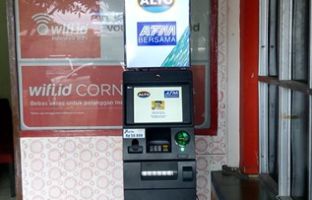
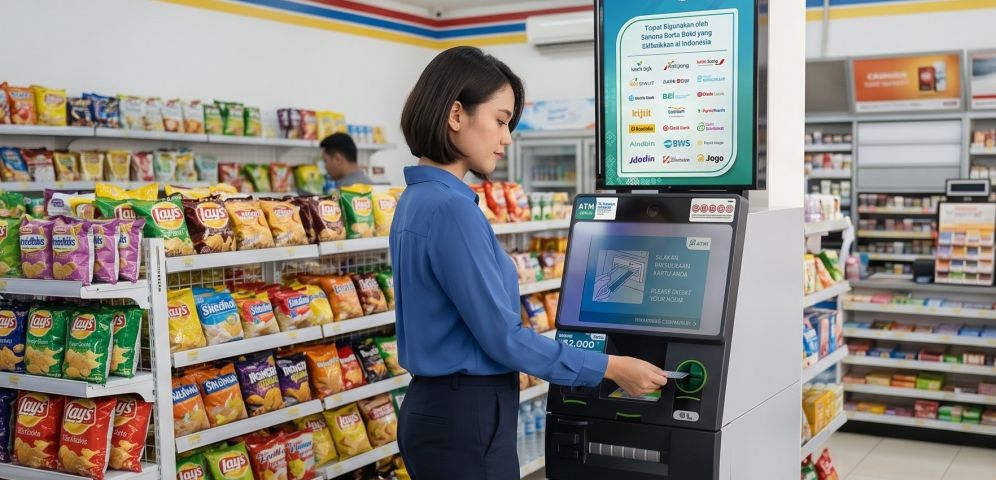
An ATM is an electronic machine that allows customers to conduct transactions independently without having to visit a bank branch in person.
ATMs make transactions more convenient because they are widely available and accessible 24 hours a day.
As technology and digital banking services continue to evolve, ATMs continue to innovate by offering features that support various transactions, such as cash deposits, bill payments, and even international transactions.
Also Read: Types of ATM Machines: Functions and Key Differences
ATMs come with different features depending on their functions. There are several types of ATMs, including:
This type of ATM is very common and is widely available in strategic locations such as supermarkets, train stations, and shopping centers. As the name suggests, cash withdrawal ATMs are designed to handle cash transactions, particularly cash withdrawals.
A Cash Deposit Machine (CDM), also known as a cash deposit ATM, is a type of ATM designed to handle cash deposits. It allows customers to deposit money independently without having to visit a bank branch.
A Cash Recycling Machine (CRM) is a multifunctional machine that allows customers to make both cash withdrawals and cash deposits.
ATMs offer various features that help people meet their modern transaction needs. The following are some of the features available on ATMs:
This feature is available on nearly all ATMs. With the cash withdrawal feature, customers can easily and efficiently withdraw cash whenever needed.
In addition to cash withdrawals, some ATMs offer a cash deposit feature, allowing customers to deposit cash independently without having to visit a bank branch.
ATMs provide a feature that allows customers to transfer funds to accounts at the same bank or at other banks.
ATMs have evolved to offer bill payment features, allowing customers to pay various bills, such as electricity, internet, and water bills.
In addition to bill payments, some ATMs are equipped with features that allow customers to top up their e-money balances.
Customers no longer need to visit a branch to check their account balance. Using an ATM, customers can check their account balance and, on supported machines, view their transaction history independently at any time.
Read More: Why ATMs Still Matter in the Digital Banking Era: Here's Why!
According to A Bi-Annual Academic Journal of the Faculty of Management Sciences, Osun State College of Technology, ATMs are equipped with a screen, buttons or a touchscreen, and software connected to the bank's network.
When an ATM is used, it typically displays language options and then prompts the customer to insert their ATM card. The system reads the information stored on the card to identify the linked account.
After the customer enters their PIN for verification, the bank's system validates the information before displaying various transaction options, such as cash withdrawals, fund transfers, balance inquiries, or bill payments.
Behind every successful transaction conducted through an ATM, there is a complex operational process that ensures the service remains available and runs smoothly. Without optimal management, the risk of operational disruptions can increase, potentially affecting the customer experience.
As a provider of ATM operational solutions, ATMi supports banking institutions in comprehensively managing their ATM networks, from operational management and monitoring to equipment maintenance and technical support. This helps ensure the availability of ATM services across various locations.
With this support, banks can focus more on developing services for their customers while keeping ATM operations efficient and reliable.
Drawing on its experience in supporting ATM network operations in Indonesia, ATMi is committed to delivering solutions that help improve efficiency, minimize downtime, and ensure that every ATM provides optimal service to the public.